
Affiliate marketing remains one of the best ways to earn money online in 2026. You don’t need your own product, a large investment, or technical skills. All you need is a smartphone or laptop, internet access, and a strategy that works. Thousands of beginners are using affiliate marketing to earn passive income by promoting products and services online. If you are completely new, this guide will help you understand how affiliate marketing works, the best platforms to join, free traffic methods, common mistakes to avoid, and how to make your first affiliate sale.
What Is Affiliate Marketing? Affiliate marketing is a business model where you promote someone else’s product or service using a special referral link. When someone purchases through your link, you earn a commission. For example, you recommend a web hosting service. Someone clicks your affiliate link. They buy the hosting plan. You earn a commission. It’s that simple. The best part is that you don’t need to handle customer support, create products, or deal with shipping. Why Affiliate Marketing Is Growing Fast in 2026 Affiliate marketing has become more beginner-friendly than ever because of AI tools, short-form content, and free traffic platforms like Pinterest, YouTube Shorts, Instagram Reels, and blogging. In 2026, people are using AI content tools, automated websites, Pinterest SEO, short videos, email marketing, and blogging to generate affiliate commissions daily. Even beginners can now compete without spending money on ads. Choosing an affiliate platform is much easier when you start with something widely used, easy to understand, and not overly complicated. Take a look at some decent platforms:
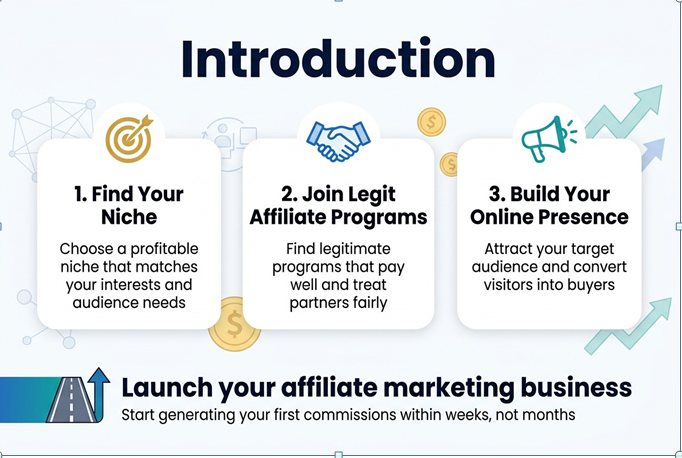
Here’s what you’ll get: the basics of how affiliate marketing works, how to pick a profitable niche that matches what you care about, how to find good affiliate programs (ones that actually pay and treat their partners well!), and step-by-step strategies for building an online presence that brings in an audience and turns visitors into buyers.
By the time you finish, you’ll have a clear map for getting your affiliate business off the ground—and you’ll be in a position to earn your first commissions within a few weeks, not months.
Understanding Affiliate Marketing—The Basics
Affiliate marketing is about connecting people with products that solve a need. You earn a commission whenever someone clicks your personalized link and makes a purchase. It’s sort of like being a digital salesperson, except you don’t need your own product, you don’t ship anything, and you skip customer service headaches. All you’re doing is recommending stuff you actually believe in.
When you sign up with an affiliate program, you get unique links that let companies track sales coming from your promotions. If your audience buys, you earn a cut. It really does boil down to recommending things you like and getting rewarded if people follow your advice.
Best part? You can promote products almost anywhere—on your website, Instagram, YouTube channel, email newsletter, or ads. The secret sauce is building genuine trust. If you help people with honest recommendations, you’ll stand out.
Who’s Involved? The Main Players
The affiliate world only works because of four groups:
– Merchants: They make and sell products, and they want to reach more buyers. That’s why they offer affiliate deals—think Amazon, Nike, all kinds of software and course creators.
– Affiliates: That’s you. Anyone who has an audience—bloggers, TikTokers, YouTubers, email list builders, whatever.
– Affiliate Networks: These folks sit in the middle. They connect affiliates and merchants, handle tracking, payments, and make it easy to find new offers. Examples include ShareASale and CJ Affiliate.
– Customers: They’re the reason all of this exists. The best affiliates keep their audience’s needs at the center.
Bottom line? Everyone wins—merchants get sales, affiliates get paid, networks get their fee, and customers find what they want.
How Do Affiliates Get Paid?
Affiliate programs aren’t one-size-fits-all. Here’s how payouts usually work:
– Pay-Per-Sale: The most common setup. You’re paid only when a sale happens via your link. Digital products, like ebooks and software, often pay much better commissions than physical products.
– Pay-Per-Click: You get paid for sending traffic to a site, even if no one buys. It’s less common, but good for high-traffic blogs.
– Pay-Per-Lead: You earn money when someone completes an action (like filling out a form or signing up), not just buying.
– Recurring Commissions: Refer a customer once (for, say, a subscription or online tool) and you keep getting paid as long as they stick around.
– Hybrid: Sometimes, programs combine more than one payment method—say, a small upfront commission plus ongoing revenue.
Why Is 2026 a Great Year to Start?
Affiliate marketing is evolving fast, and 2026 is the prime time to jump in. Here’s why:
– E-commerce is stable and predictable now. That makes spotting strong niches easier than ever.
– AI-powered tools level the playing field. Beginners can use AI for research and content, so you’re not stuck reinventing the wheel or learning everything from scratch.
– Social media platforms keep getting more affiliate-friendly. It’s simpler than ever to turn viewers or followers into buyers on Tik Tok, Instagram, and YouTube.
– Audiences trust regular people and niche experts now, not celebrities. If you’re authentic and helpful, you’re already ahead.
– Subscription-based products keep booming, which means more recurring commissions for you.
– New privacy laws mean everyone’s marketing is on a more even playing field. If you prioritize genuine relationships, you’ll thrive.
– Most shopping happens on phones now, and newer affiliates naturally get mobile-first marketing, while the old-timers are still catching up.
Picking Your Niche
Researching Hot Markets
Success in affiliate marketing starts with choosing the right market. Here’s how to spot winners:
– Start with Google Trends to see what people are searching for, not just this week, but over months. Look for steady growth, not just short viral spikes.
– Check Amazon’s Best Sellers—over and over. If something keeps showing up, demand is there.
– Social media is a goldmine. See what’s trending on TikTok, YouTube, and Instagram. Tools like BuzzSumo can show you what content is blowing up.
– Read summaries from Statista or McKinsey if you want the big picture. You don’t have to pay for a subscription—most offer free highlights.
– Big-picture trends like remote work, health products, sustainable living, or anything for older adults (think supplements or senior tech) are all solid bets right now.
Tapping Into Your Own Interests
You’ll go further if you actually care about what you’re marketing. It’s easy to spot a fake, so stick to what you already like or know.
Ask yourself: What do you talk to friends about? What do people come to you for advice on? What podcasts or YouTube channels eat up your spare time?
If you have specialized experience, use that. Ex-teachers can build authority in education, fitness coaches can talk about nutrition and gear, and so on.
Try to draft a quick buying guide or review off the top of your head. If you can do it—and it sounds natural—you’ve probably found a niche worth exploring.
Sizing Up Competition and Profitability
Don’t run from competition—it usually means there’s money to be made. But you should know what you’re up against.
– Google your niche keywords. Are the top results huge sites with massive resources, or are there regular bloggers and smaller publishers mixed in? If smaller sites can rank, there’s room for you.
– Compare commission rates! Amazon pays less, but is trusted. Niche-specific networks often pay more. Digital stuff (software, courses) generally pays better than physical products.
– Check out how competitors make money—are they all-in on affiliate links, or do they also use sponsored content and email marketing? Steal what works.
– Use tools like SEMrush or Ahrefs if you want to see where your competitors get their traffic and what keywords bring in sales.
– Think through the basics: How many visitors would you need to make $1,000 a month? Some niches pay more per sale, so you might not need as much traffic as you expect.
Finding the Best Affiliate Programs
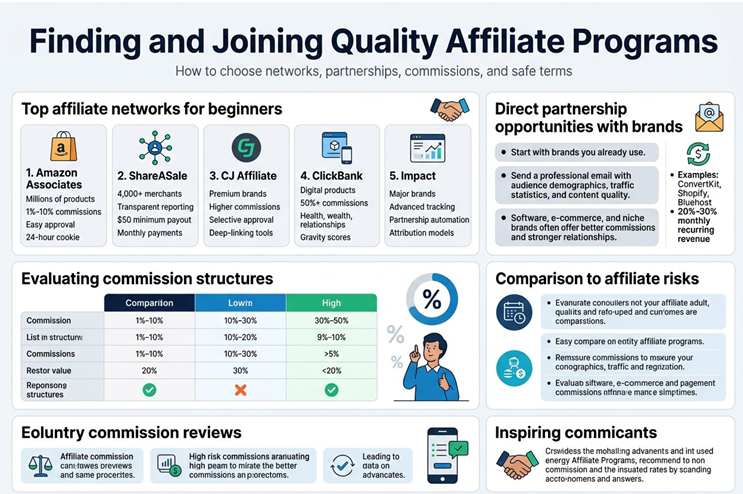
Top Networks for New Affiliates
When you’re just starting out, use networks that have already done the heavy lifting and can connect you with loads of merchants.
– Amazon Associates: Super beginner-friendly. Tons of products. People trust Amazon, so sales are easier. Commissions are low, but you earn on anything people buy after clicking your link.
– ShareASale: Huge variety of merchants and helpful tools. Payouts are predictable.
– CJ Affiliate: Home to big brands like Nike and Target. You’ll need to get approved, but it’s worth it for higher commissions and trust.
– ClickBank: Specializes in digital products. High commissions, but check the product quality—some can be hit or miss.
– Impact: Works with large brands and offers advanced tracking. A little more complex, but professional.
Going Direct With Brands
Sometimes, you’ll get the best deals by working directly with a brand instead of going through a network.
– Reach out to brands you truly like—shoot them a well-crafted email highlighting your audience and why you’d be a great partner. Be specific, not generic.
– Software tools, especially in the B2B space, almost always have recurring affiliate deals. Those add up if you’re thinking long-term.
– Some direct partnerships aren’t widely advertised. Check what your competitors do, then follow their lead.
Evaluating Payouts and Program Rules
Not all programs are created equal. Before you sign up:
– Be mindful of the payment structure—flat rates, percentages, or tiers. Sometimes a smaller percentage pays more just because the product costs more.
– Check payment frequency and thresholds. The earlier you can get paid, the better.
– Cookie durations matter. Longer cookies mean you’re more likely to get paid even if your visitor takes a few days to decide.
– Program rules can make or break you. Some programs ban certain types of promotion or paid ads. Others have strict content guidelines.
– Be wary of commission clawbacks or programs with tough chargeback policies. You want deals that pay only on confirmed sales.
– Exclusivity clauses can tie your hands, so read all the fine print.
Building Your Presence Online
Creating Your Website
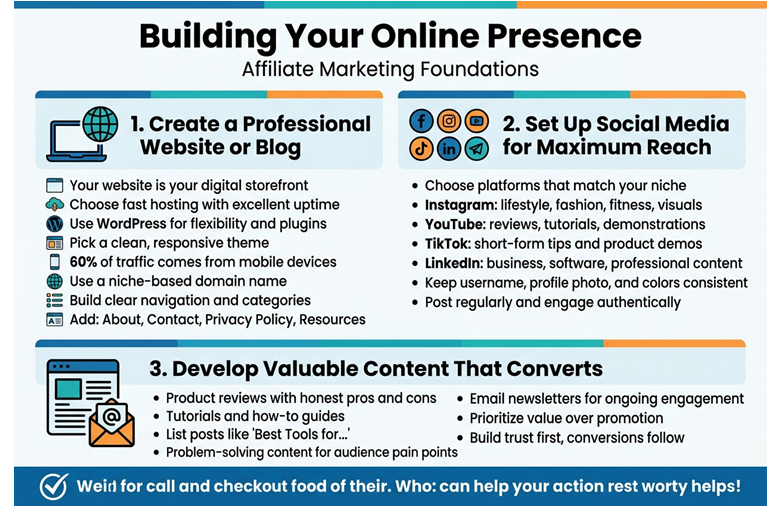
Your site is the core of your whole operation. It’s where people get to know you—and decide if they trust you enough to buy.
– Pick a reliable, fast web host. WordPress is usually the go-to because it’s flexible and easy to expand.
– Choose a domain that’s simple and fits your niche. Clear navigation and mobile-friendly design are musts—most traffic is mobile now.
– Make sure you have an About page (to show who you are), Contact page, Privacy Policy, and a Resources page for your top affiliate picks.
Maximizing Social Media
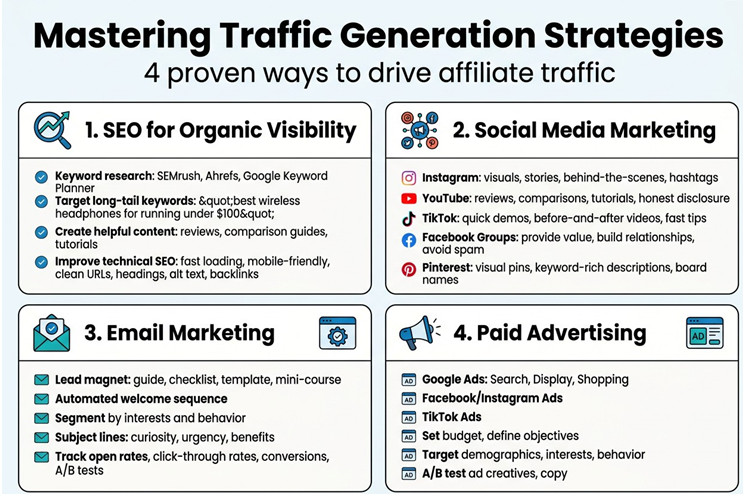
Social platforms help you reach more people and drive traffic to your offers.
– Instagram is perfect for visual or lifestyle niches. Use stories, reels, and high-quality images to connect—not just push products.
– TikTok helps you go viral fast if your content is attention-grabbing.
– YouTube is massive for evergreen reviews and “how-to” content; it’s ideal if you’re comfortable on camera.
– Don’t feel you need to be everywhere—pick the platforms that fit your style and focus there.
Keep building trust, learning what works, and growing your online real estate. That’s the secret to affiliate success in 2026.